





On the 29th May 2019, the UNDFF Global Action Plan (GAP) was officially launched by FAO and IFAD in Rome The GAP is a tool to implement strategies, policies and investment at global, regional, national and local levels, with an integrated approach where the productive sphere, social and cultural aspects and environmental issues are strongly interlaced and translated into indicative and interconnected actions following the seven mutually reinforcing pillars of the UNDFF
Given the extensive heterogeneity of family farms around the world, general policy prescriptions are unlikely to be relevant to all family farmers. To effectively support family farming, it is necessary to consider its particular geographic and socio-economic specificities and to develop context-specific interventions focused on the explicit features of the relevant family farmer groups and which take into account specific needs of women and men and youth, while building on locally available resources and capacities. Indicative actions presented under the pillars provide guidance for all actors in building plans, policies and strategies at different levels. While presenting potential approaches or entry points, they cover a wide range of possible areas of interventions simultaneously targeting different aspects (including obstacles) of family farmers, to be assessed in a holistic manner for concrete action.
A solid process is promoted to contextualize the implementation of the Global Action Plan of the UNDFF at national and regional levels. For this purpose, the UNDFF envisages the development of 100 NAPs by 2024. This target is ambitious, but attainable, especially considering the support received through the approval of the UN General Assembly (and the 104 countries co-sponsoring the ‘IYFF+10 campaign’).
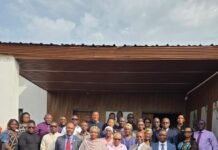
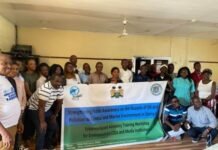
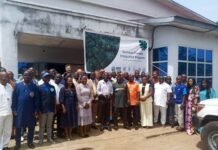
FAO and the Ministry of Agriculture have contracted Mr Frank Webber as a Consultant to do regional consultations and develop a draft National Action Plan for United Nations Decade of Family Farming in Sierra Leone. This consultation took place in all the five regions in Sierra Leone.
The National Action Plans (NAPs) can serve as consolidated frameworks of action at national level for the support of family farming. NAPs include context and country-specific actions, thus providing a roadmap for countries and regions to progress with the implementation of the UNDFF, allowing for the building of accurate interlinkages to the broader SDG process, and giving value to the multidimensional contribution provided by family farming. Building on existing national strategies, activities and processes and exploring new instruments and mechanisms, the NAPs can promote policy coherence, multi-actor and inter-institutional cooperation, with the aim to mainstreaming and integrating family farming-related issues into the wider food and agricultural policies and strategies, as well as in the broader social and environmental policies.
NAPs provide an inclusive umbrella for all relevant national stakeholders to consolidate, align and reinforce their actions and define policy interventions in support of family farming across different sectors at the national level. Actions should be built based on an agreed and a strategic vision that intertwines national priorities with the general objectives of the UNDFF. NAPs can include specific commitments based on the jointly identified needs and priorities and translate them into public policies, programmes, regulations and investment. Actions can be aligned to the indicative actions proposed in the seven pillars of the GAP and are to be tailored and adapted to national and local condition.
It is recommended that the process to develop a NAP should be inclusive, supportive and enhancing the participation of all actors, including family farmers (peasants, fisher folk, pastoralists, indigenous peoples, traditional communities, maintain farmers, forest users, women, men and youth, ethnic groups, among others). On this note, local, national, regional and global multi-actor fora and platforms for policy dialogue, – including National Committees of Family Farming- aimed to coordinate and complement actions in support of family farming could represent key partners in the identification, design, implementation and monitoring phases. This process guarantees that all actors provide their complementary contributions according to their specific roles and responsibilities, promoting multi-actor collaboration in order to mobilize key players, convert identified needs into concrete actions; ensure empowerment and agency that leads to efficient processes, effective results and sustainable impact.