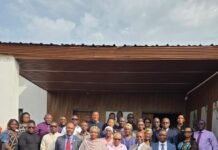



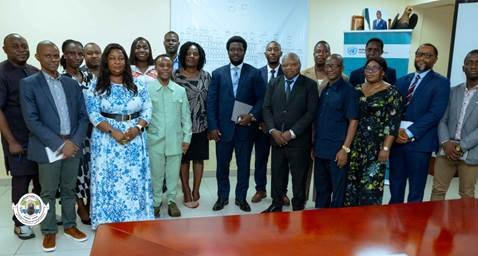
The Anti-Corruption Commission (ACC) on Thursday, 29th January 2026, hosts a high-level Mission from the African Development Bank (AfDB) at the Conference Room of Integrity House, Tower Hill, Freetown.
Disclosing the purpose of the meeting, Prosper Charle, Country Economist at the AfDB explained that the engagement aimed to evaluate the country’s economic landscape, support policy reform processes, and conduct an eligibility assessment for budgetary assistance. He noted that corruption remains a critical governance and macro-economic challenge, making it necessary to better understand the operational environment, reform priorities, and institutional capacity of the ACC.
Making a statement, Valentine Nnamakula, Principal Governance Officer at AfDB, expressed strong interest in Sierra Leone’s governance tools and accountability instruments, particularly in high-risk sectors vulnerable to corruption. She emphasized the need to strengthen collaboration among institutions, build a resilient ecosystem of accountability and oversight, and enhance the effectiveness of policy implementation.
In his remarks, the Commissioner of the ACC, Francis Ben Kaifala, reaffirmed the Commission’s commitment to supporting national economic stability through robust anti-corruption interventions, noting that corruption is not only a legal concern but a macro-economic threat. He highlighted that the ACC operates under a broad legal mandate built on pillars of prevention and enforcement, with one of the most comprehensive and complete scopes of anti-corruption laws in Africa.
He further disclosed that Sierra Leone currently records one of the highest Asset Declaration compliance rates in Africa, and that the Commission intends to strengthen Lifestyle Audits through its Asset Declaration Roadmap, aimed at improving verification, asset tracing, and enforcement mechanisms.
However, the Commissioner also highlighted resource constraints, noting that policing is not the primary challenge, but rather limited logistics, vehicles, technological tools, and operational funding. Despite these challenges, the Commission reported that significant progress has been made in its work.
The ACC boss further underscored the urgent need for Sierra Leone to digitize key governance and revenue systems, warning that delays in digital transformation pose serious corruption and fiscal risks. “Reforms that dismantle monopolies and digitize systems are critical areas where development partners must now invest, as these interventions significantly reduce corruption risks, increase revenue generation, address leakages, and strengthen domestic resource mobilization”, he stressed.
The engagement concluded with a shared commitment between the AfDB and the ACC to strengthen collaboration, enhance institutional effectiveness, and support reforms aimed at promoting transparency, accountability, and economic resilience in Sierra Leone.
The meeting was chaired by the Deputy Commissioner of the ACC, Augustine Foday-Ngobie, with Directors and senior management staff of the Commission present. The delegation also included representatives from the Ministry of Finance, reflecting the multi-sectoral importance of strengthening governance and fiscal accountability in Sierra Leone.