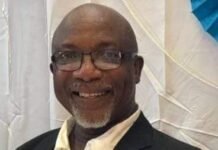



Freetown, Sierra Leone — What began as a young professional’s dream in 2008 has evolved into one of the most ambitious telecommunications transformations in Sierra Leone’s recent history. The story is that of entrepreneur David Kpakima, whose trajectory from corporate employee to industry-shaping founder has been marked by setbacks, bold decisions, and high-stakes partnerships.
From Corporate Climb to Startup Setback
Kpakima entered the corporate telecom world with a conviction that he would one day build something of his own within the industry. After eight years rising through senior roles, he left the sector in 2016 to launch his first startup—a venture that ultimately failed but became a turning point.
He later joined another early-stage company, helping scale it into a multimillion-dollar operation within 18 months. That experience strengthened his resolve to pursue his own vision.
A New Vision for National Connectivity
A contract to redesign the commercial model for Sierra Leone Cable Limited exposed Kpakima to the structural challenges facing the country’s internet infrastructure. Soon after, he began exploring the idea of deploying a second subsea cable—an ambitious plan given the country’s economic and regulatory landscape.
During this period, he engaged Davar Fazaeli, with whom early discussions evolved into a partnership proposal. While Kpakima designed the business and operational model, Fazaeli committed to financing the initiative. When government issued an RFP to privatize the existing subsea cable, the team pivoted, proposing a hybrid model that linked current assets with a new physically diversified cable.
Their bid won the concession, sparking significant public attention and sector-wide debate.
Financing Challenges and a Domestic Breakthrough
Although financing had been expected from Kpakima’s partner, no capital was injected in the initial months of transition. Facing mounting operational pressures, Kpakima secured $2 million in domestic debt from Skye Bank, which he describes as the true launch of their digital transformation agenda.
Metro Cable and the Rise of a National Fiber Network
With funding stabilized, Kpakima and his team began constructing what would become Metro Cable, an extensive metropolitan fiber network. Within 18 months, more than 1,400 km of fiber was deployed across Freetown, enabling affordable access for operators and reshaping competition in the market. The companies expanded from 18 employees to over 365, generating more than 1,300 direct and indirect jobs.
Portfolio Expansion: One Mobile and Vult
Kpakima later proposed acquiring K3 Telecom, then Sierra Leone’s largest ISP. The asset was restructured and relaunched as One Mobile, the first standalone 5G mobility network in West Africa, financed through a blend of Skye Bank, Zenith Bank, and FBN.
During this period, he also developed Vult, a digital payments platform that has since achieved more than 500,000 downloads and become a major player in prepaid digital cards.
Across the group’s operations, Kpakima highlights several metrics:
43,000+ operational hours of subsea cable uptime
Over NLe 30 million in domestic taxes paid annually
More than $1.8 million in yearly concession fees
Four new portfolio companies formed
Millions raised in leveraged financing
No personal equity capital injected
The Human Cost and the Partnership Rift
Despite the company’s expansion, Kpakima acknowledges personal sacrifices—including limited family time and growing distance from social circles.
In 2025, discussions with partner Fazaeli over equity adjustments reportedly triggered internal tensions. According to Kpakima, after requesting recalibration due to unmet capital commitments from the early phase, relations deteriorated. He says the disagreement culminated in a unilateral attempt by Fazaeli to suspend him—an action Kpakima claims contradicts corporate governance protocols.
A controversial newspaper article soon circulated, which Kpakima’s camp believes was designed to damage his reputation. Legal and PR teams responded swiftly, and the matter has since escalated into an ongoing dispute.
What Comes Next
While legal proceedings continue, Kpakima says external stakeholders are now involved in seeking a fair resolution. Public support, he notes, has been significant, with many community members expressing appreciation for the sectoral transformation achieved under his leadership.
Despite current tensions, Kpakima frames the journey as part of a larger movement toward national economic participation and long-term infrastructure development.
“We may not reap all the benefits today,” he reflects, “but we are building the runway for the next generation.”